A short video about the Cova de Santa Llúcia. This dramatic location was used by the British Medical Unit as a hospital during the Ebro Battle, the biggest of the Spanish Civil War. Inexcusably I forgot to talk about the nurses. There was something of a thunderstorm outside so the sound could have been better. Blackbirds were singing.
At the end of the video, we came upon the visitors book. Descendants of International Brigaders from the US and Quebec, and most movingly a boy from Syria linking the Spanish Civil War with today.
I write about this visit in my book “Travels through the Spanish Civil War”.
Author Archives: nick2
El més petit de tots
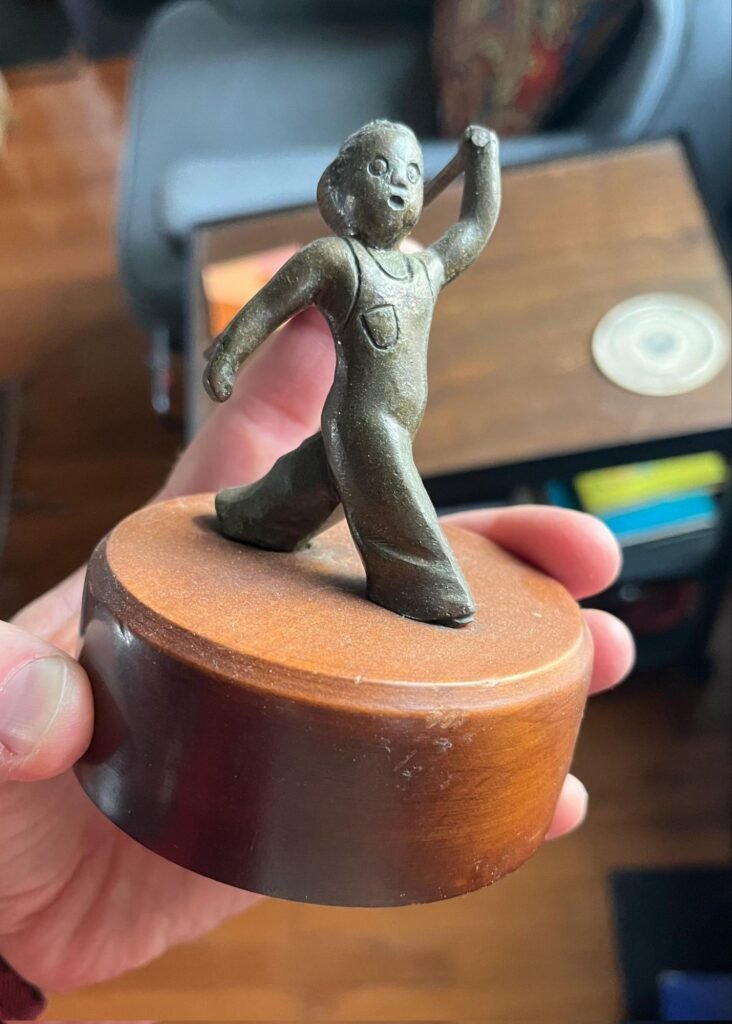
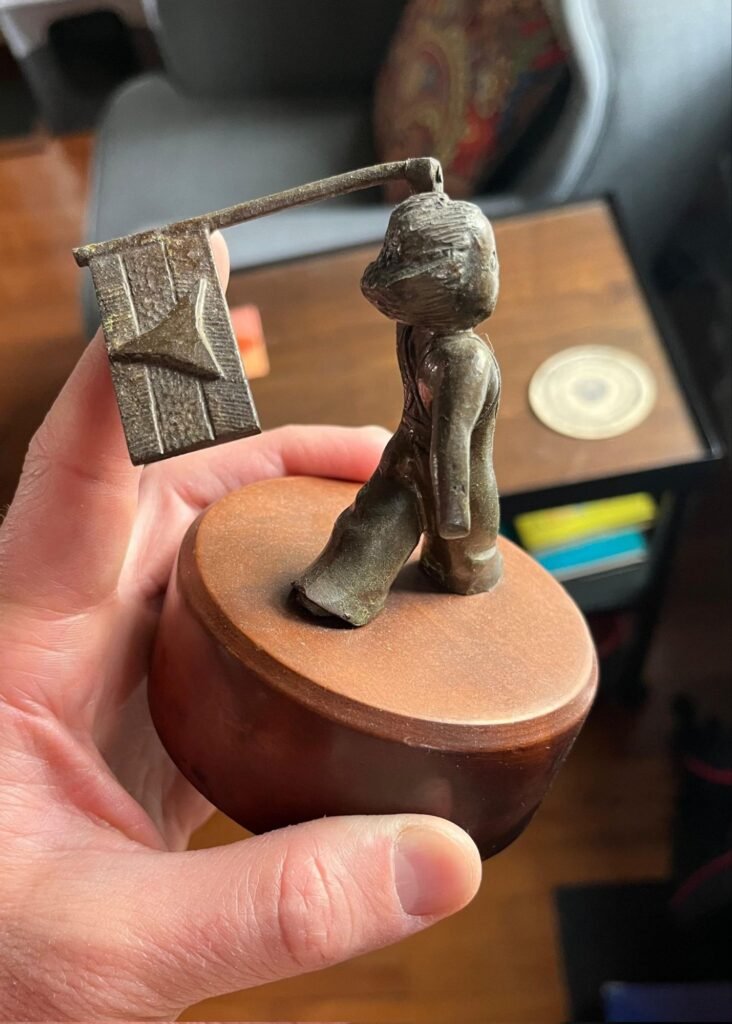
These photos were sent to me by the family of Bill Susman, American International Brigader, wounded at the Ebro. He brought this famous and lovely figure back from Catalonia in 1938. It’s called “El més petit de tots” (The smallest of them all”). It was created by the sculptor Miquel Paredes for the Comissariat de Propaganda of the Catalan government de la Generalitat de Catalunya in February 1937 as a symbol of the revolution and resistance of the Catalan people against fascism. There was also a children’s book. There were Catalan Republican, Anarchist and Communist versions. This one has the three-point star of the International Brigades so it’s in homage to that. They were usually painted so I guess this was unfinished when Bill acquired it, probably in Barcelona.
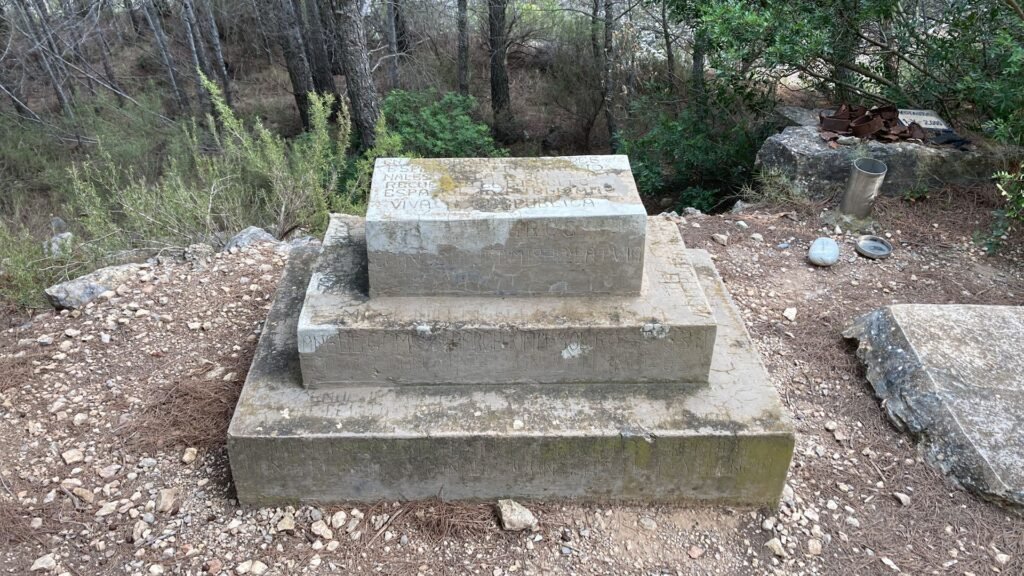
Memorial to the International Brigades in the battle of the Ebro
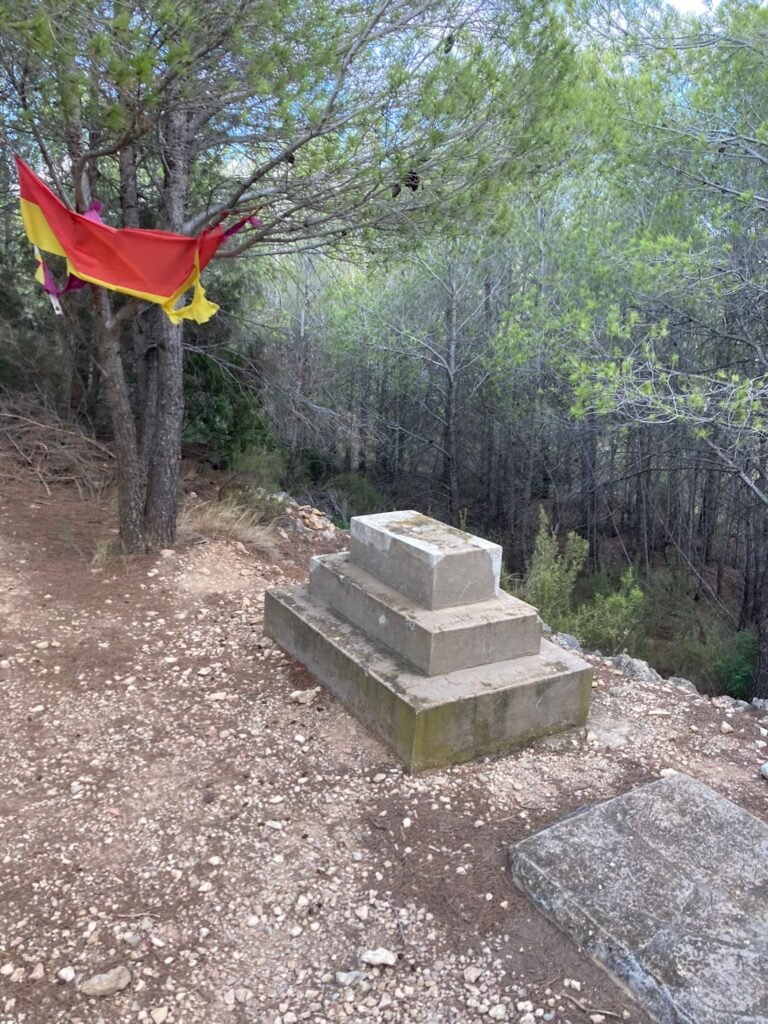
Memorial in the Serra de Pàndols, erected in 1938 with the names of officers in the International Brigaders killed in the Ebro battle. The memorial survived the Franco regime hidden in these hills and was rediscovered some years ago. The Spanish fRepublican lag has taken a battering since I was last there.
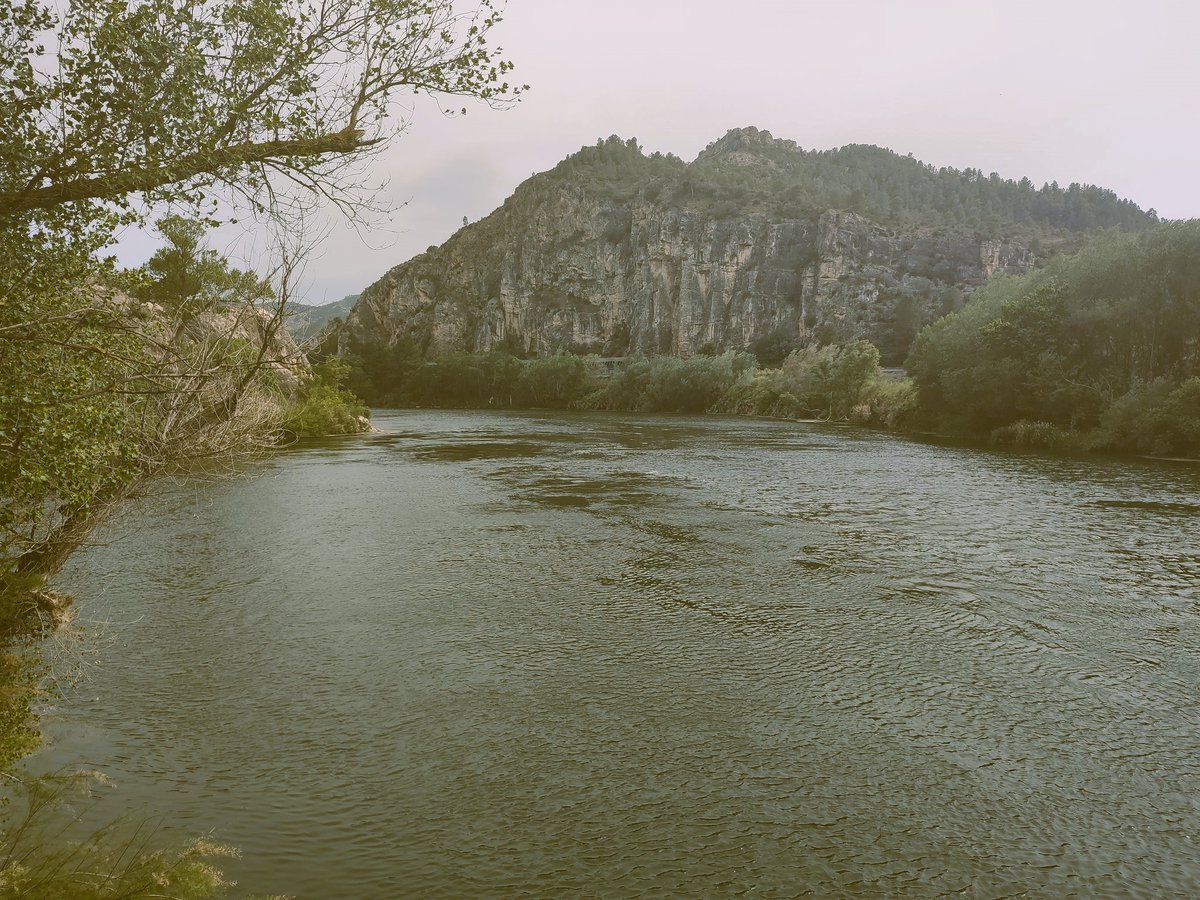
Crossing the River Ebro
The River Ebro flowing fast near Mora d’Ebre. They crossed it on a moonless night in July 1938, seeming a great victory, became a terrible defeat. Later they sang to it in union halls in Glasgow, exile cafes in Caracas and Toulouse, secretly at night in camp huts in Austria in Europe’s dark heart.
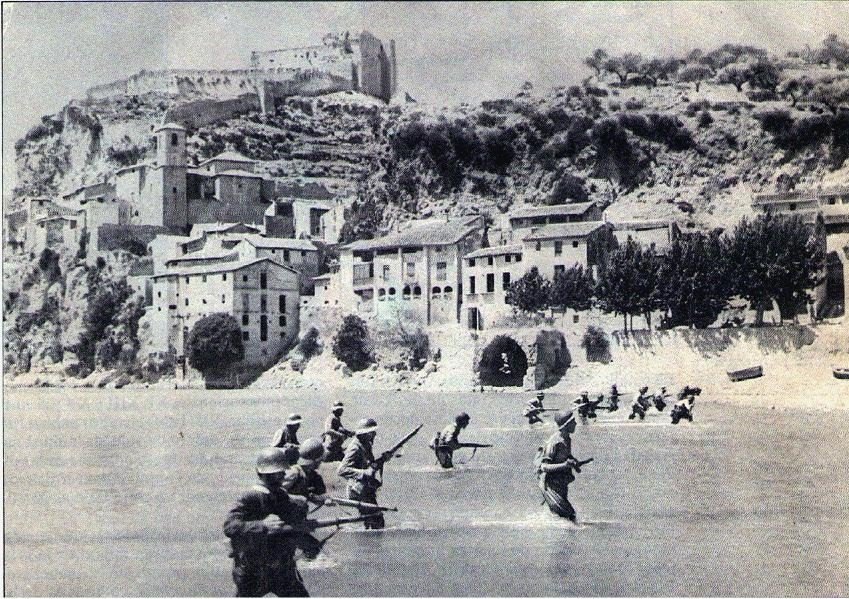
Republican forces crossing the Ebro river at Minavet at start of eponymous battle in July 1938. The image is in fact staged as propaganda shot some time after crossing (which in any case was at night) but portrays dramatism of events.
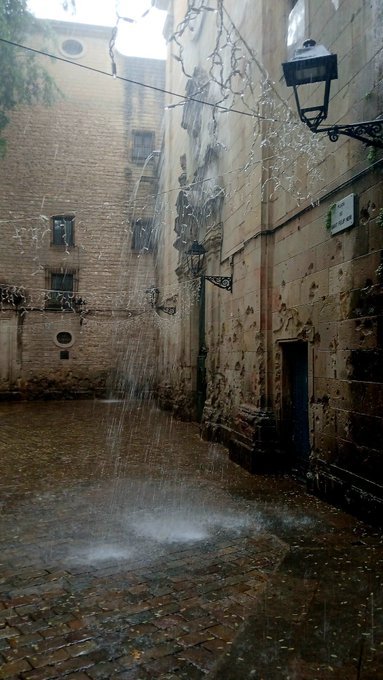
Torrential rain in Barcelona
Absolutely bucketed it down this week in Barcelona, the marks of Mussolini’s murderous bomb behind on the façade of Sant Felip Neri. Then, on Saturday, Barcelona yesterday broke its highest rainfall levels ever recorded over 24 hours. Around 200 mm. The new climate normal is that weather records are smashed everywhere.
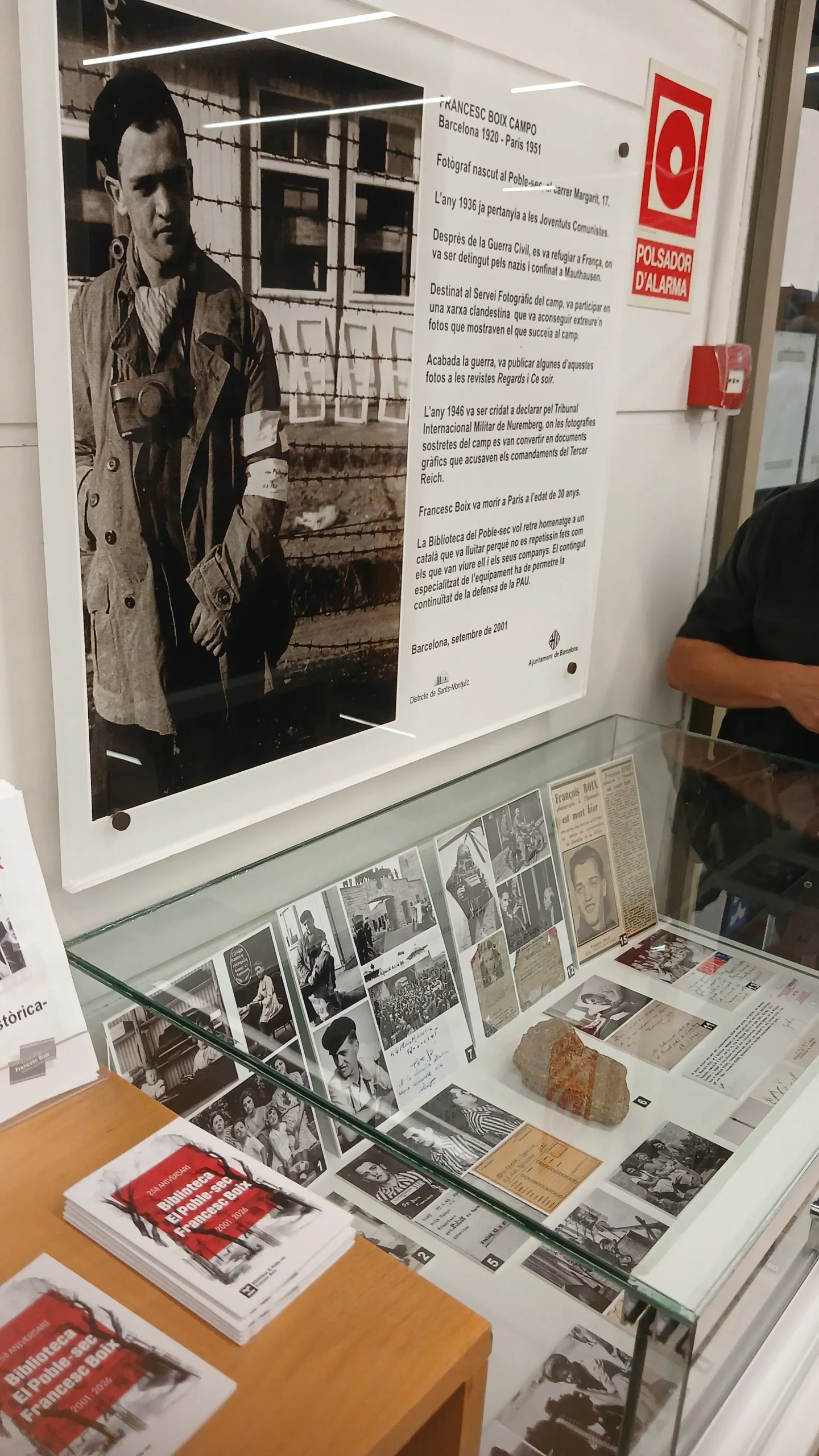
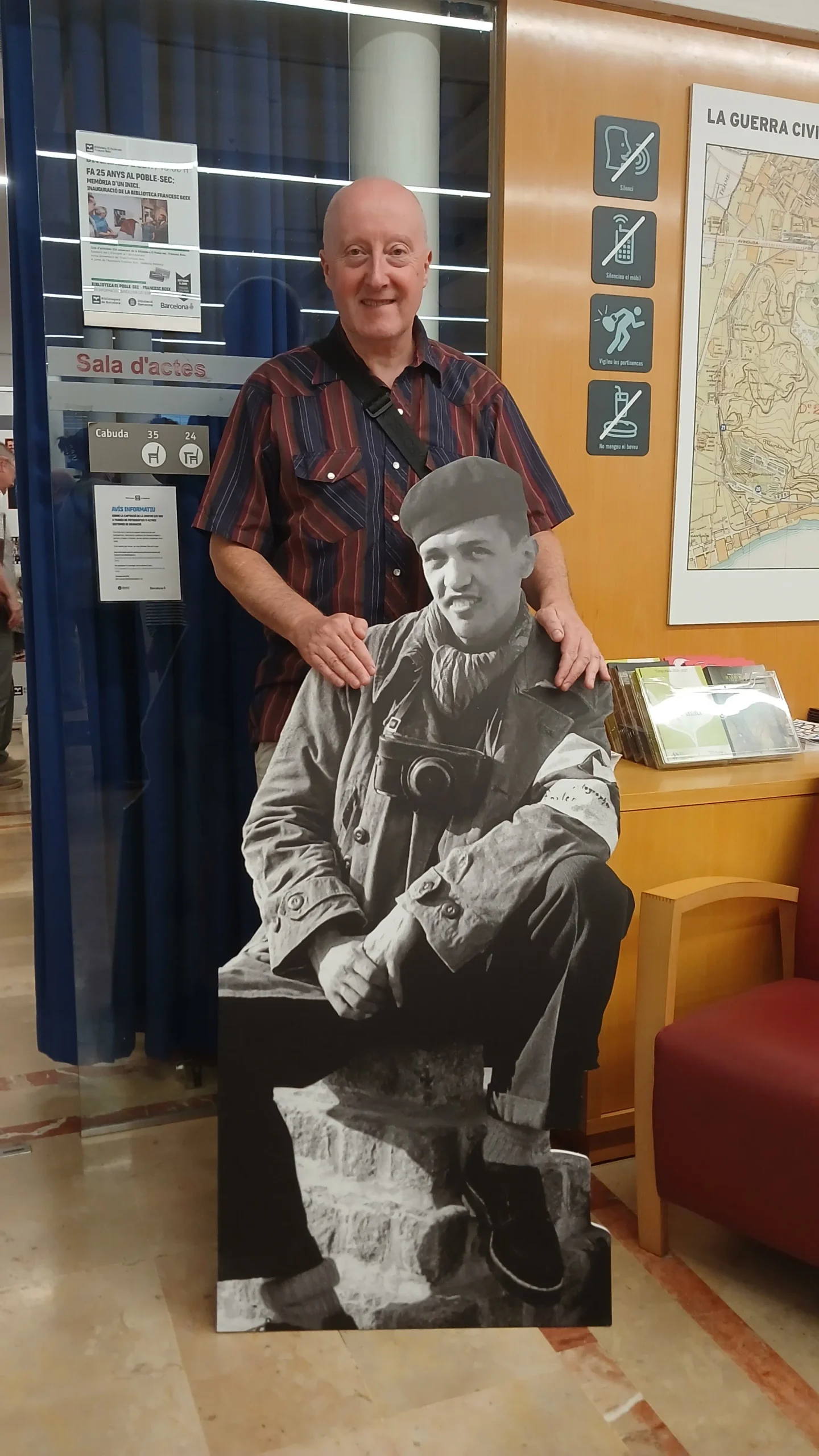
Francesc Boix exhibit
I’m honoured to have played a small role in putting together our permanent display on Francesc Boix, the photographer of Mauthausen, at the Biblioteca de Poble-sec Francesc Boix. With the Associacio Boix
The Cable Street battle
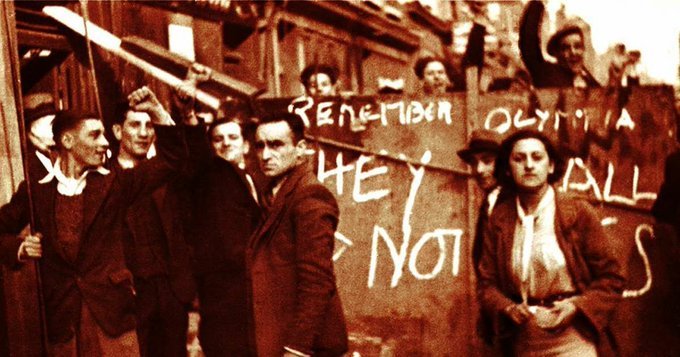
The Cable Street battle, Jewish London East End on 4 October 1936 with their banner explicitly adapting the antifascist slogan of the defence of Madrid “NO PASARÁN.” They shall not pass. They fought against police -who allowed the fascist march. Many then came to Spain. Note. Remember Olympia refers to 1934 British Union of Fascists meeting where they set on antifascist protesters.
John Coltrane’s Olé
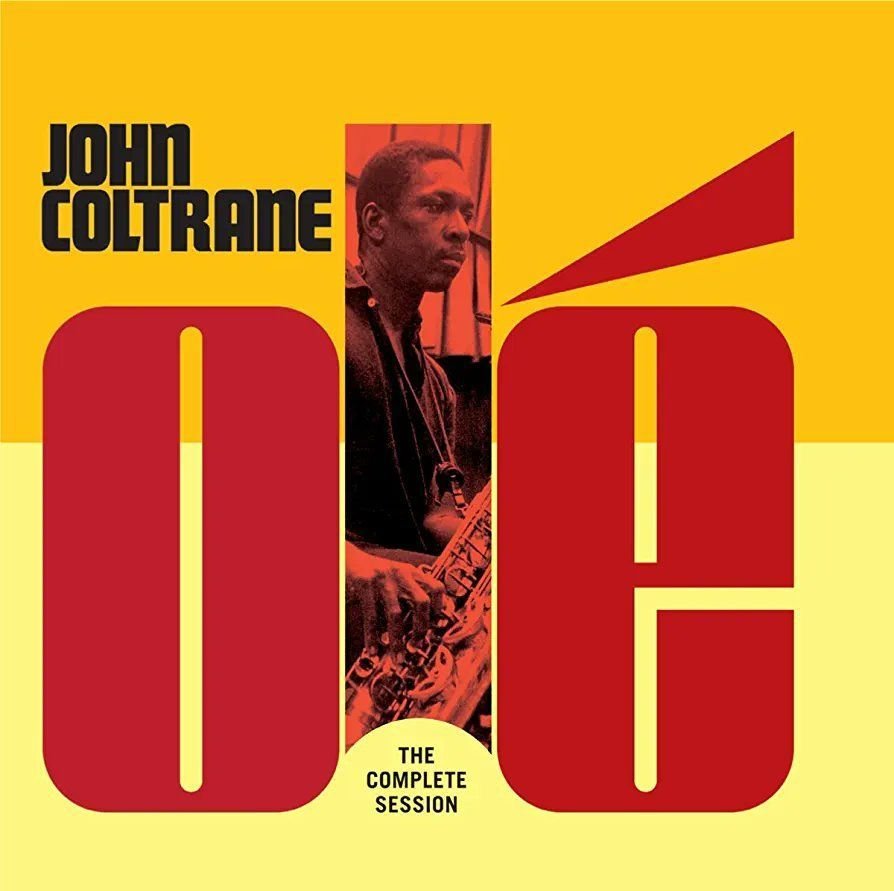
John Coltrane’s Olé (1961). Lorca”s “Gypsy ballards”, Langston Hughes’ articles and poems from Spain, Malcolm X, New York flamenco clubs, Pete Seeger’s rendition of the Spanish Civil War classic El Quinto Regimiento and the memory of American brigaders which Coltrane must surely have known… I can listen again and again.
CNT tram
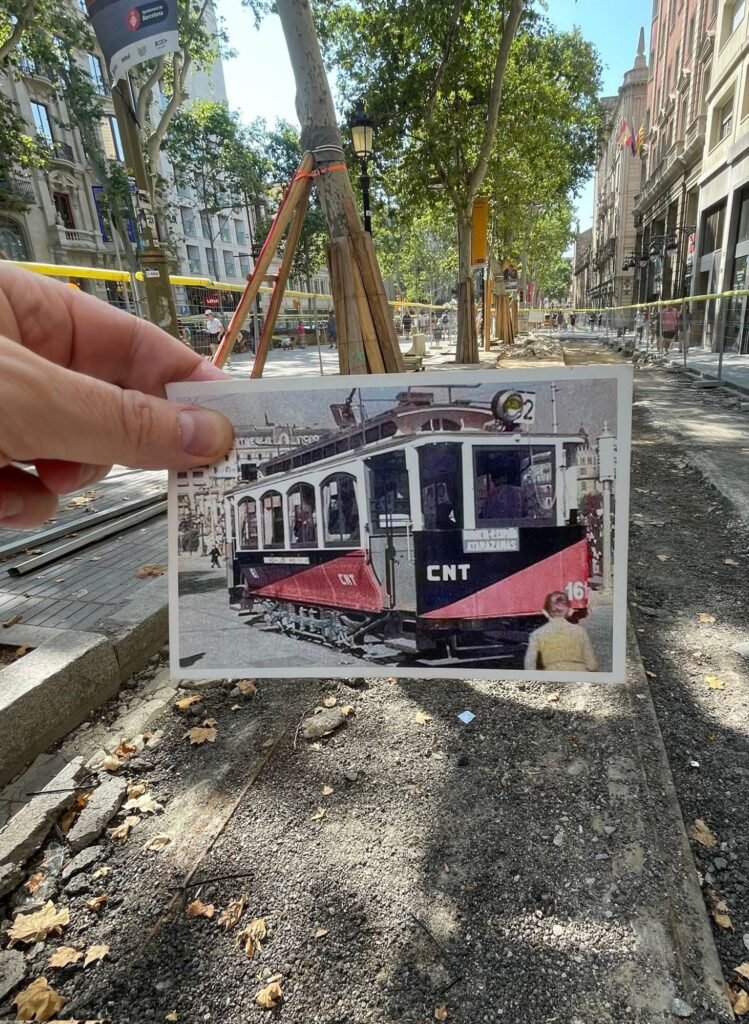
Tram lines last year unearthed as part of the reform of La Rambla this morning Photo: No. 16 collectivised tram, 4 minutes up the street in Plaça de Catalunya, 1936.
The line stopped running in 1961.
Madrid, 1936
Madrid.
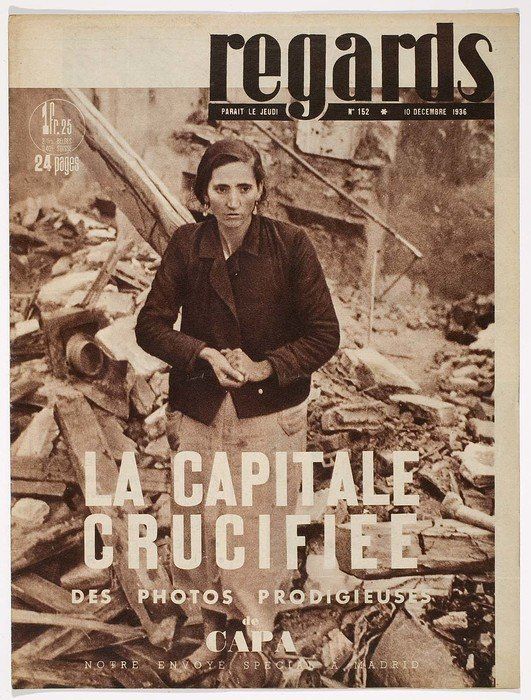
10 December 1936. Front cover of French magazine Regards.
Robert Capa